Four Days to Ala-Kul: A 60+ Kilometre Trek from Karakol to Ak-Suu
There are hikes that you remember because of the views.
There are hikes you remember because of the people you met.
And then there are hikes that you remember because, somewhere along the way, you began wondering quite seriously why you had thought this was a good idea in the first place.
The four-day trek from Karakol to Ak-Suu via Ala-Kul, Nomad Camp and Altyn-Arashan falls firmly into the third category.
It is spectacular, demanding, occasionally brutal and completely unforgettable.
Over four days, the route covers more than 60 kilometres, climbing from the forested valleys around Karakol into the high alpine landscape surrounding Ala-Kul Lake, crossing a mountain pass at well over 3,000 metres and eventually descending into the magnificent Altyn-Arashan valley.
The scenery changes almost constantly.
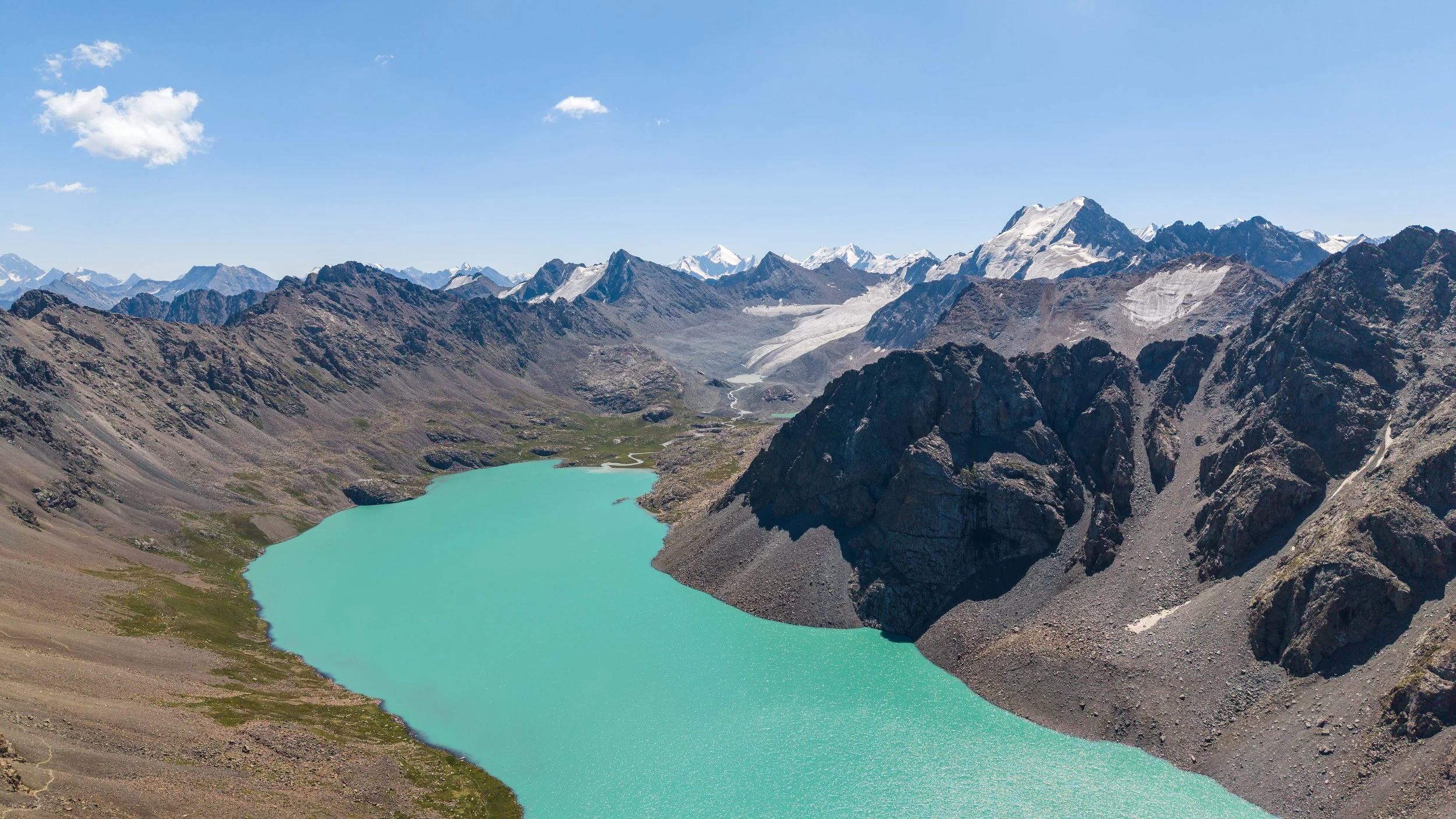
Pine forest gives way to open mountain valleys. Rivers become waterfalls. The trees thin out as the altitude increases. Then suddenly the landscape opens into an enormous bowl of rock, snow and scree, with the turquoise waters of Ala-Kul appearing below.
And just when you think the hardest part is over, the descent begins.
This is not a gentle four-day walk.
It is a proper high-altitude mountain trek.
But if you are prepared for long days, steep climbs, rough terrain and rapidly changing weather, the Ala-Kul route is one of the most rewarding hiking adventures in Kyrgyzstan.
The Ala-Kul trek at a glance
The route begins around Karakol, one of Kyrgyzstan's main mountain towns and a natural base for exploring the Tien Shan.
Over four days, the trek heads deep into the mountains before finishing around Ak-Suu.
The route described here includes overnight stays at:
Nomad Camp
Ala-Kul Lake Yurt Camp
Altyn-Arashan
The total distance is 60+ kilometres, depending on the exact starting and finishing points and any additional walking around the camps.
The route involves substantial elevation gain and loss, with the highest point being Ala-Kul Pass, at roughly 3,900 metres above sea level.
That altitude is an important part of the challenge.
The distances alone are manageable for a reasonably fit hiker.
The combination of distance + elevation + altitude + terrain + consecutive long days is what makes this trek demanding.
Why hike Ala-Kul?
Kyrgyzstan is a country made for walking.
Much of the landscape is enormous, open and relatively untouched. Roads disappear into valleys, mountains rise dramatically from the grasslands and horses roam freely across slopes that seem to stretch forever.
The Ala-Kul trek captures much of what makes hiking here so special.
It takes you from relatively accessible forest trails into genuinely wild alpine terrain in just a few days.
You don't need to be a technical mountaineer.
You don't need climbing equipment for the standard route.
But you do need to be comfortable with long days on your feet.
And you need to respect the altitude.
The reward is extraordinary.
Day 1: Karakol to Nomad Camp
The first day begins relatively gently.
At least, that's what you tell yourself.
Leaving Karakol, the route heads towards the mountains and eventually into the forested valley.
The transition is immediate.
The urban environment disappears behind you and the soundscape changes.
Traffic is replaced by running water.
Buildings disappear.
The mountains become increasingly dominant.
The trail follows the valley, with the river providing a constant companion.
This is one of those days when the walking itself feels almost therapeutic.
There is no immediate pressure to reach the highest point.
Instead, you settle into the rhythm of the trail.
Walk.
Look around.
Stop for water.
Walk again.
The forest valley
The lower part of the route passes through beautiful mountain forest.
Tall trees line the valley and provide welcome shade when the sun is strong.
The river frequently appears beside the trail before disappearing around another bend.
At times the route feels almost impossibly peaceful.
Then you remember that you are carrying everything you need for several days in the mountains.
And the legs begin to notice.
The first day is about finding your rhythm.
Don't make the mistake of racing.
There are still three days ahead.
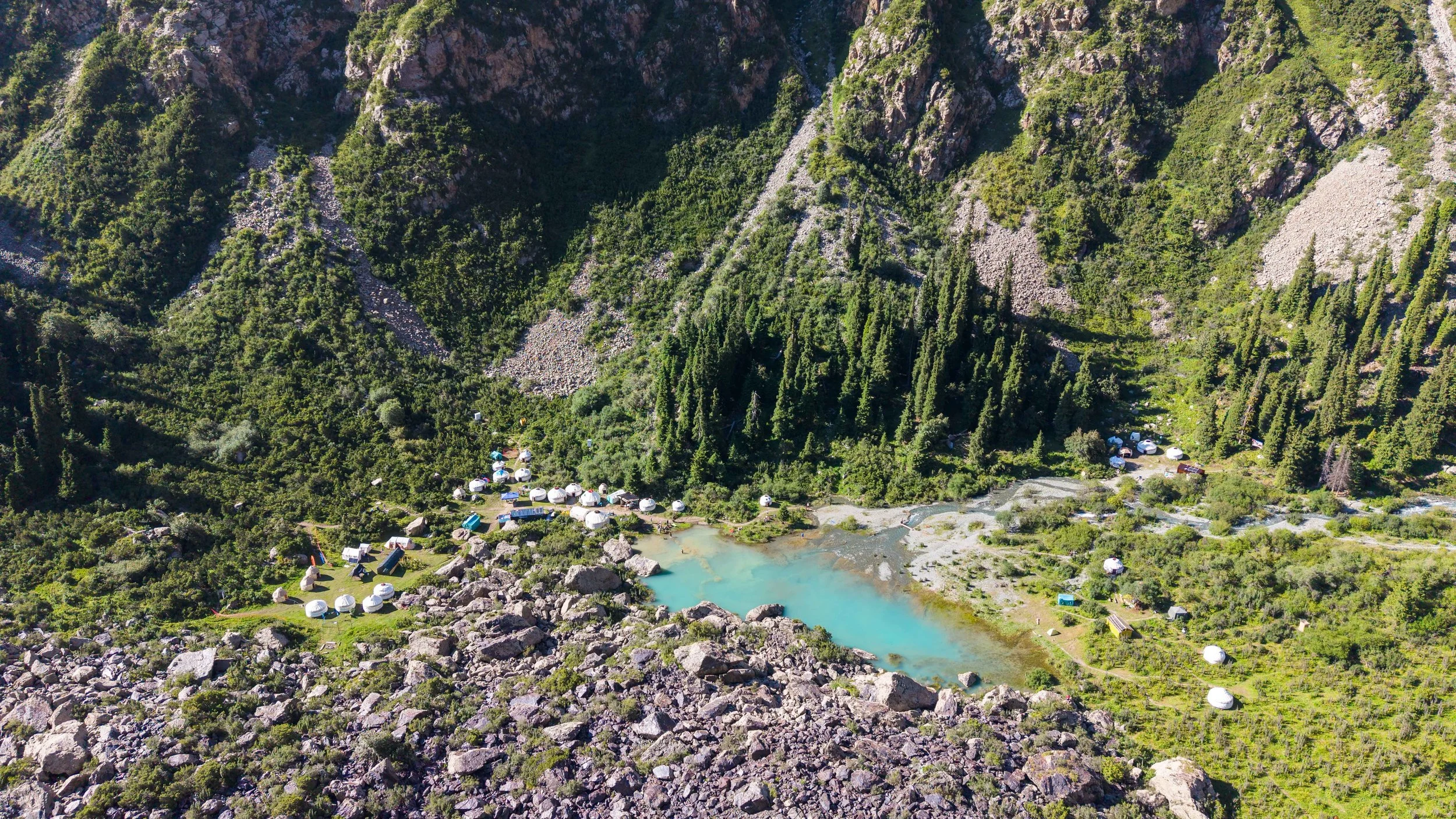
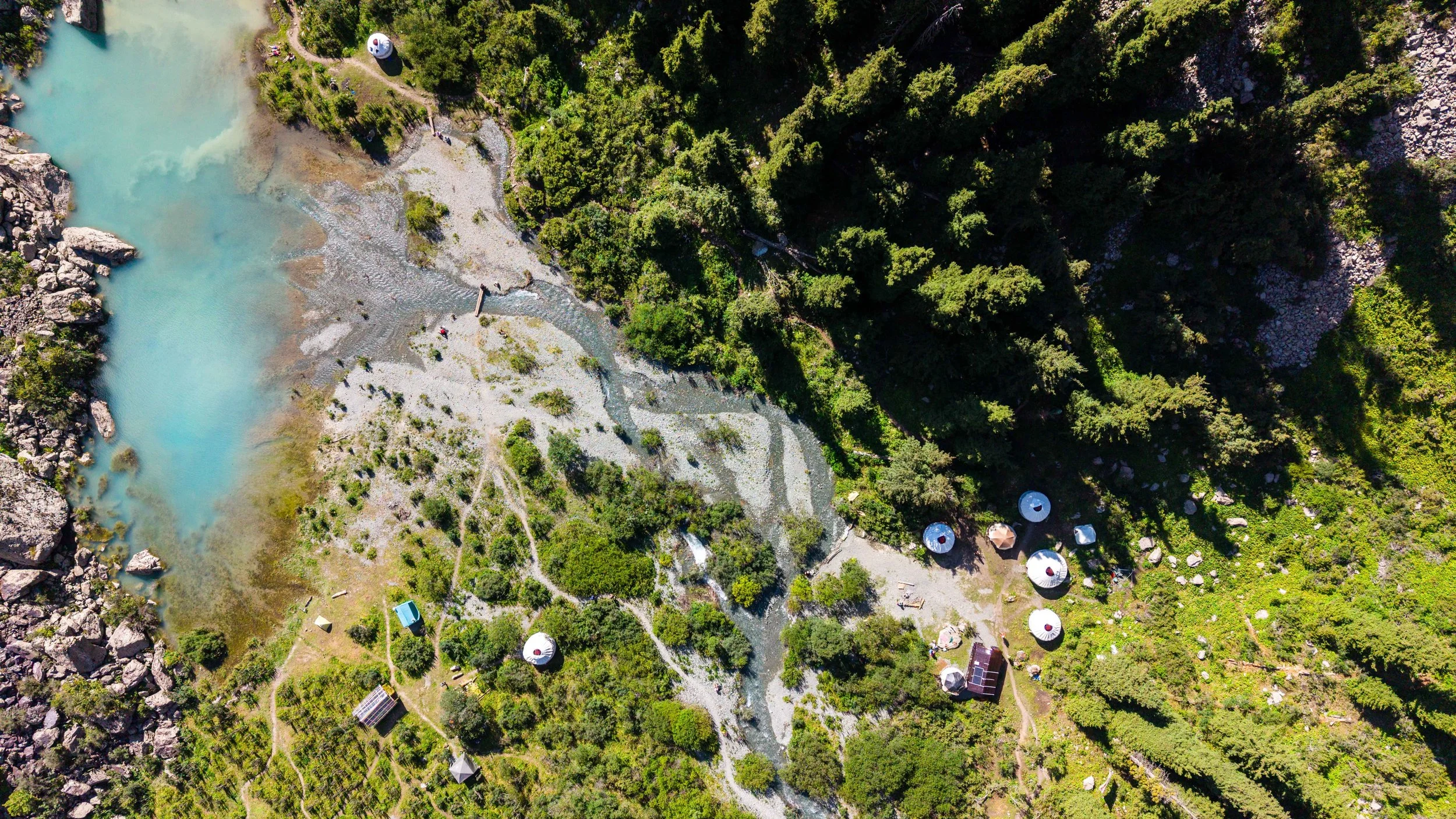
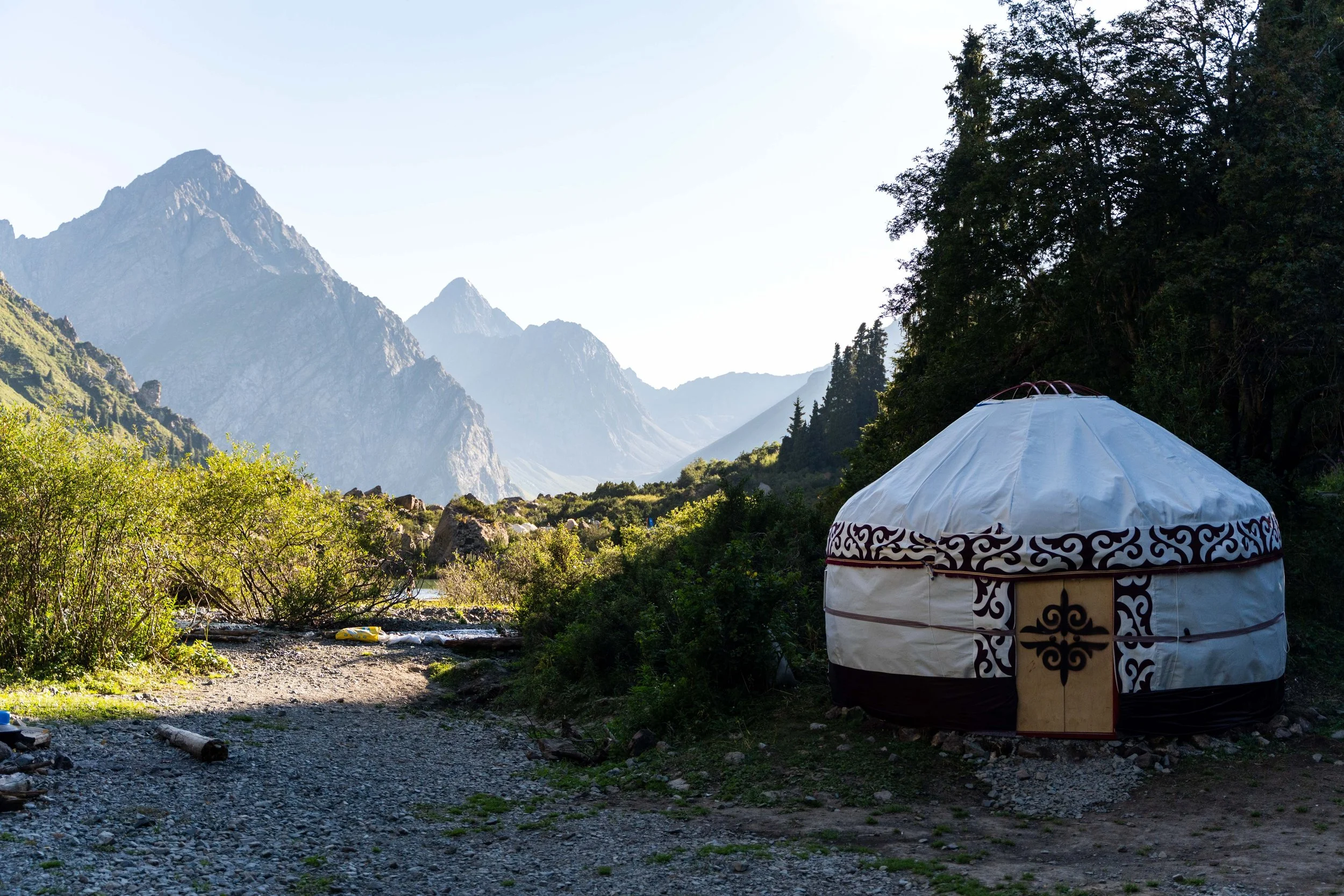
Arriving at Nomad Camp
Eventually the day's walking brings you to Nomad Camp.
After hours on the trail, arriving at camp feels like reaching an oasis.
There is something special about mountain camps in Kyrgyzstan.
The accommodation may be simple, but the setting is extraordinary.
You are surrounded by mountains.
The air is clean.
There is little or no background noise.
And once darkness arrives, the night sky can be spectacular.
This is also the point when you begin to understand that the following day is going to be significantly harder.
Tomorrow is Ala-Kul.
Day 2: Nomad Camp to Ala-Kul Lake Yurt Camp
Day two is where the trek becomes serious.
The landscape starts changing.
The comfortable forest paths gradually become steeper.
The valley narrows.
The trees become less dominant.
The trail starts climbing more aggressively.
And the altitude begins to make itself known.
This is the day when pacing becomes critical.
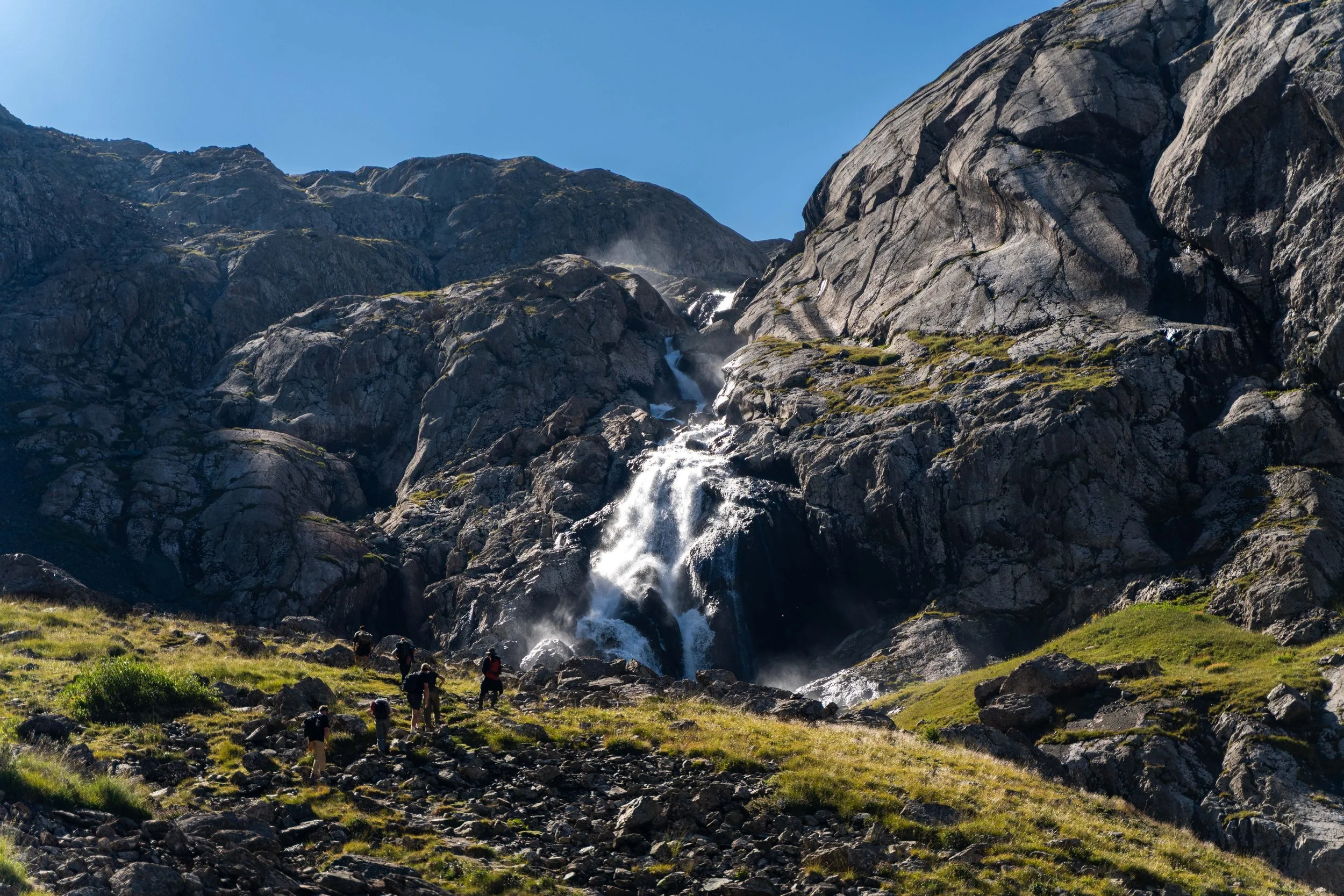
Climbing towards Ala-Kul
The approach to Ala-Kul is one long lesson in mountain walking.
The route climbs steadily, and eventually very steeply.
The trail can become rocky and uneven.
There are sections where every step requires concentration.
And then there is the altitude.
At sea level, a steep climb is simply a steep climb.
At 3,000 metres, it becomes something else.
Your breathing changes.
Your heart rate rises faster.
Your legs feel heavier.
You stop more often.
The solution is not to fight it.
Slow down.
Take smaller steps.
Breathe.
Keep moving.
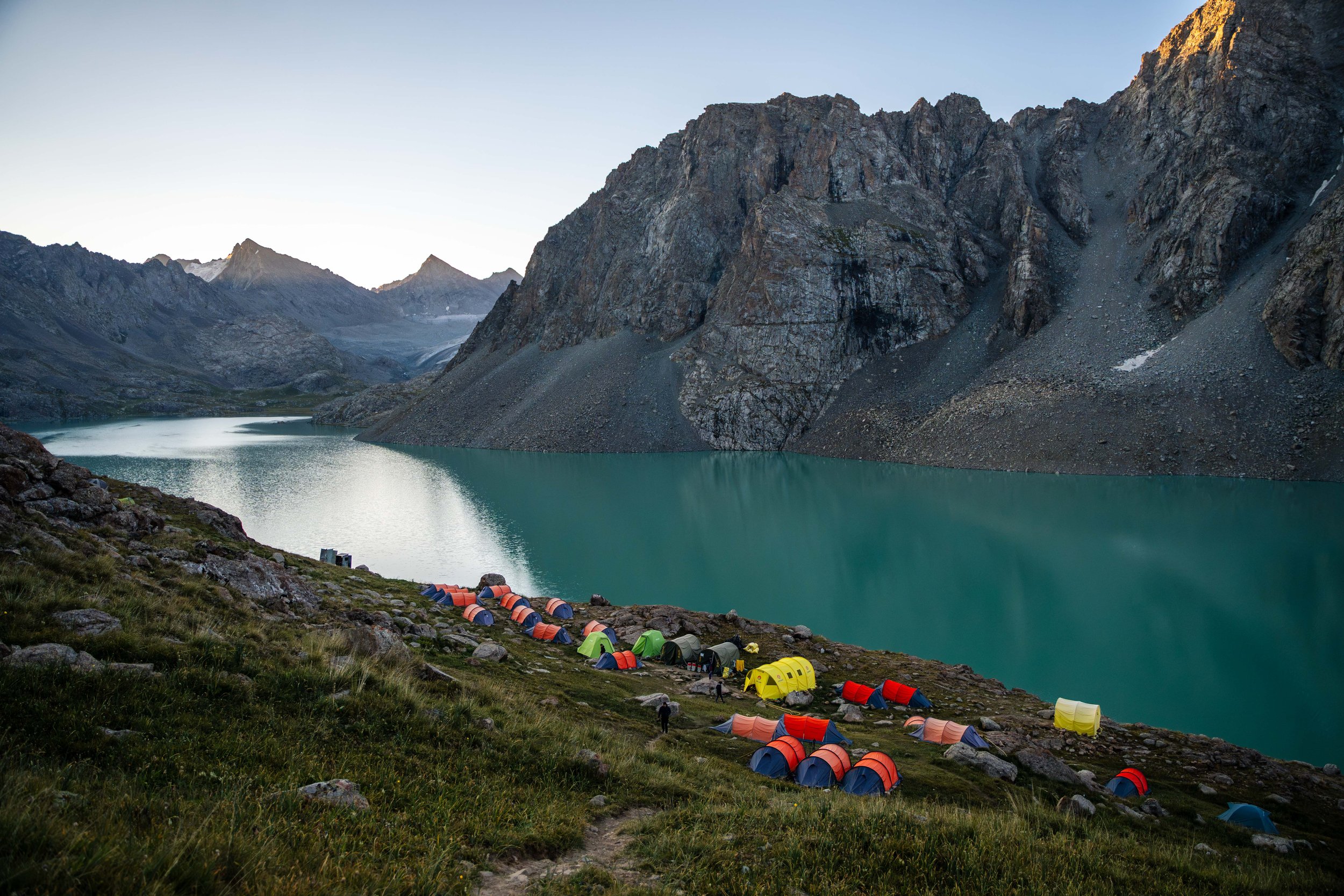
The first glimpse of Ala-Kul
Then comes one of the great moments of the trek.
You climb higher.
You reach a point where the terrain begins to open.
And suddenly you see it.
Ala-Kul.
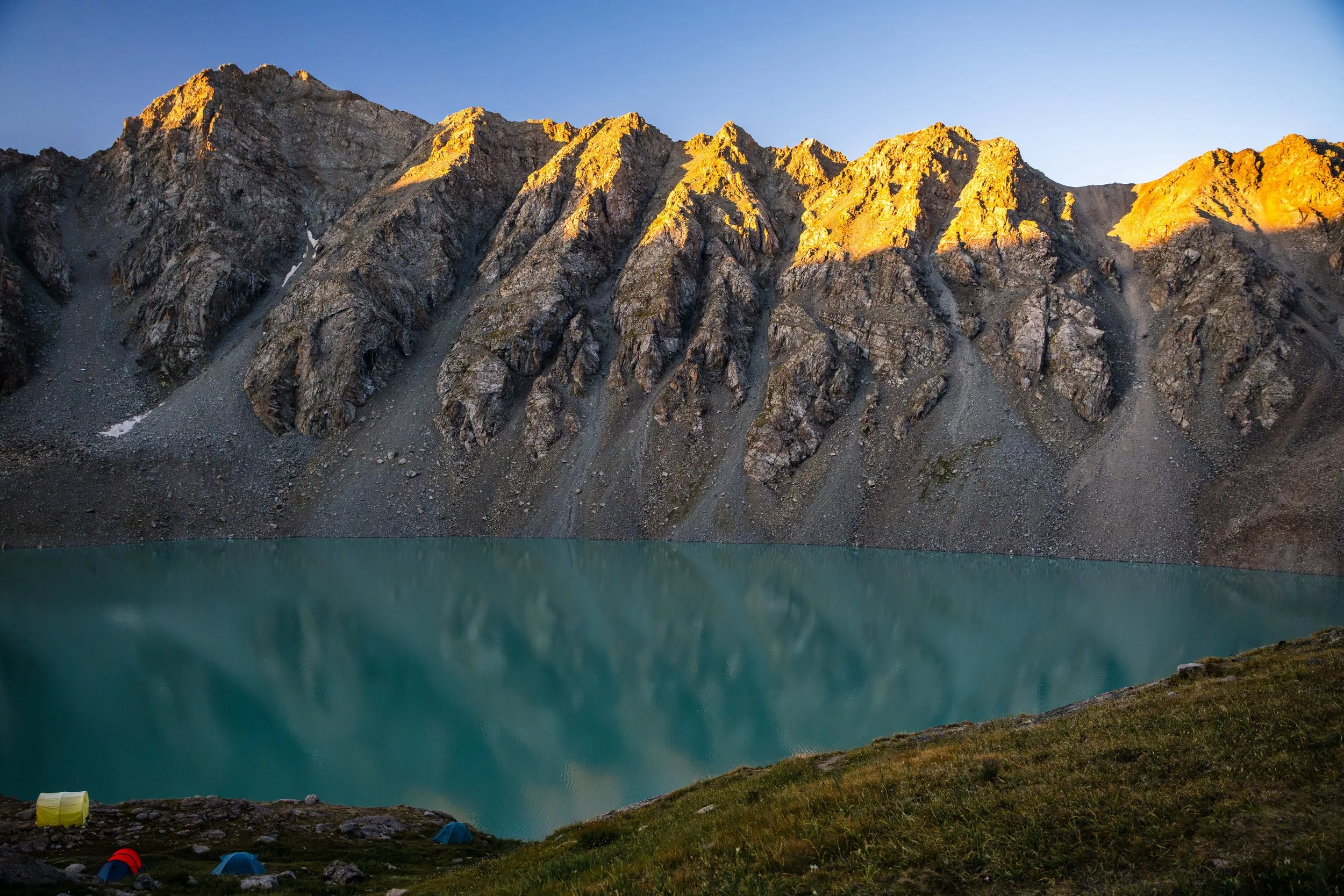
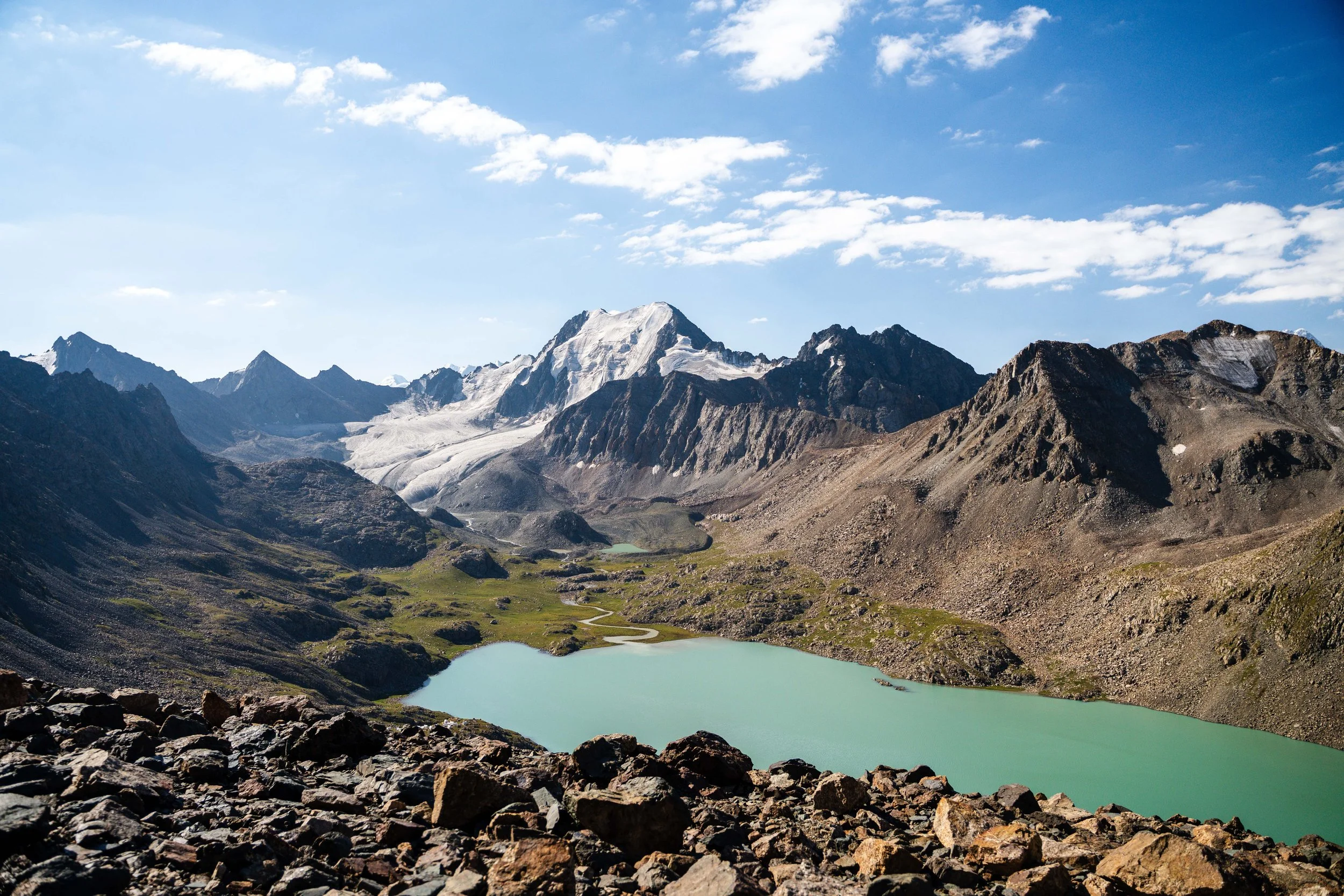
The lake sits dramatically among the surrounding mountains, its blue-green water contrasting with the grey rock and snow-covered peaks.
The first sight of the lake makes the previous hours worthwhile.
It is difficult to describe just how dramatic the setting is.
There is no gentle approach.
The lake appears almost suspended in the mountains.
You stand there looking across the water, knowing that you still have to reach camp, but also knowing that you are unlikely to forget this view.
Ala-Kul Lake Yurt Camp
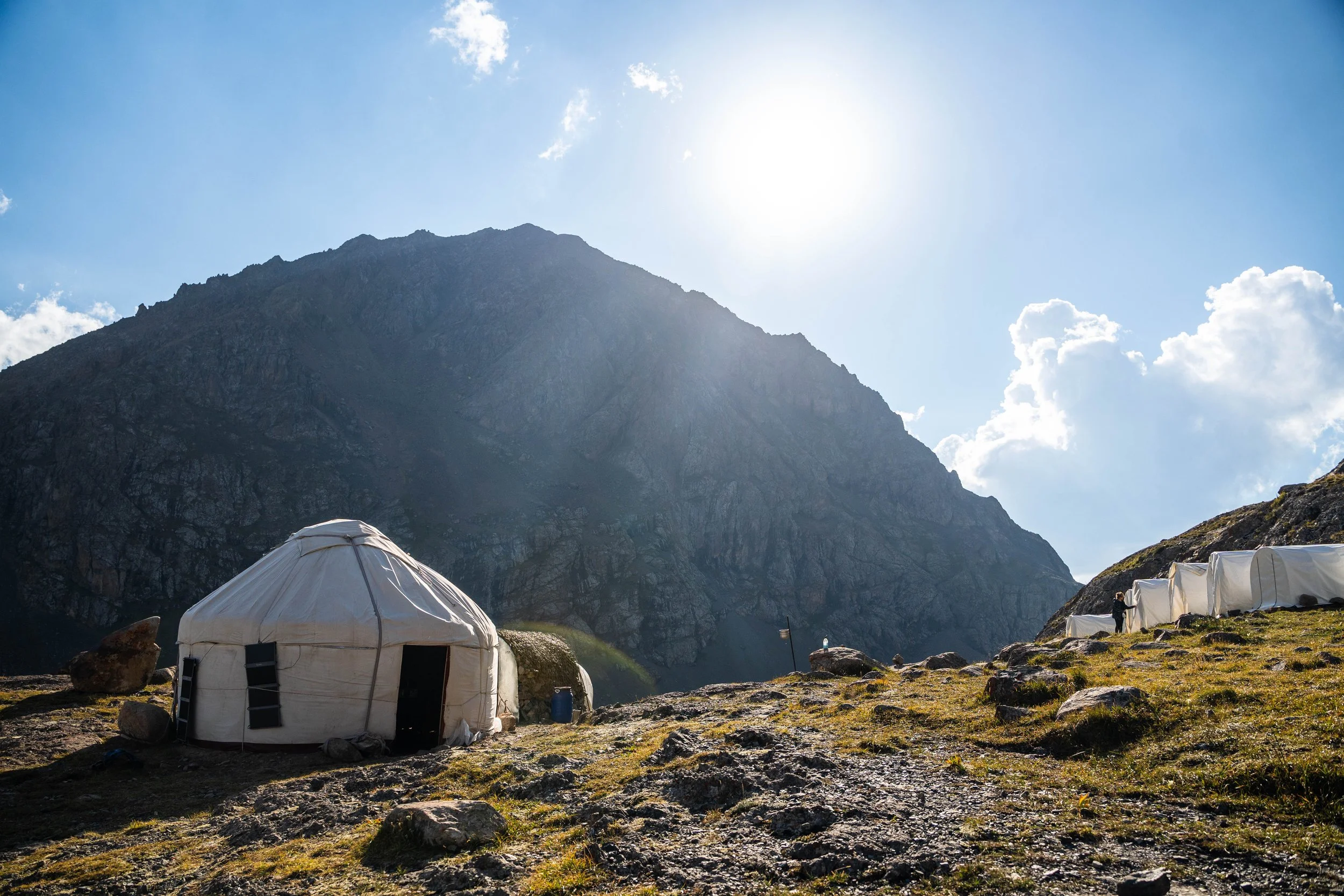
The second night is spent at the Ala-Kul Lake Yurt Camp.
The setting is about as spectacular as mountain accommodation gets.
A yurt surrounded by high mountains beside one of Kyrgyzstan's most famous alpine lakes.
There is something wonderfully simple about it.
No luxury.
No distractions.
Just food, warmth, tired legs and an extraordinary landscape outside.
By this stage, the day's kilometres have caught up with you.
Dinner tastes better.
Tea tastes better.
And sitting down becomes an achievement.
Sleeping at altitude
Sleeping at high altitude can be different from sleeping at lower elevations.
Even if you are physically exhausted, sleep may not come easily.
You may notice that your breathing feels different.
You may wake during the night.
You may have a mild headache.
This is why altitude should never be treated casually.
Ala-Kul is high enough that your body needs time to adapt.
Listen to it.
A mild reduction in performance is normal.
Severe symptoms are not.
If you experience significant headache, confusion, difficulty walking, severe breathlessness at rest, persistent vomiting or rapidly worsening symptoms, altitude illness needs to be taken seriously and you should descend rather than attempting to push onwards.
The mountain will still be there.
Day 3: Ala-Kul, the Pass and Altyn-Arashan
Day three is arguably the defining day of the trek.
It combines the high point of the route with one of its most spectacular descents.
The morning begins around Ala-Kul.
And then comes the climb to Ala-Kul Pass.
The climb to Ala-Kul Pass
Looking at the pass from below can be intimidating.
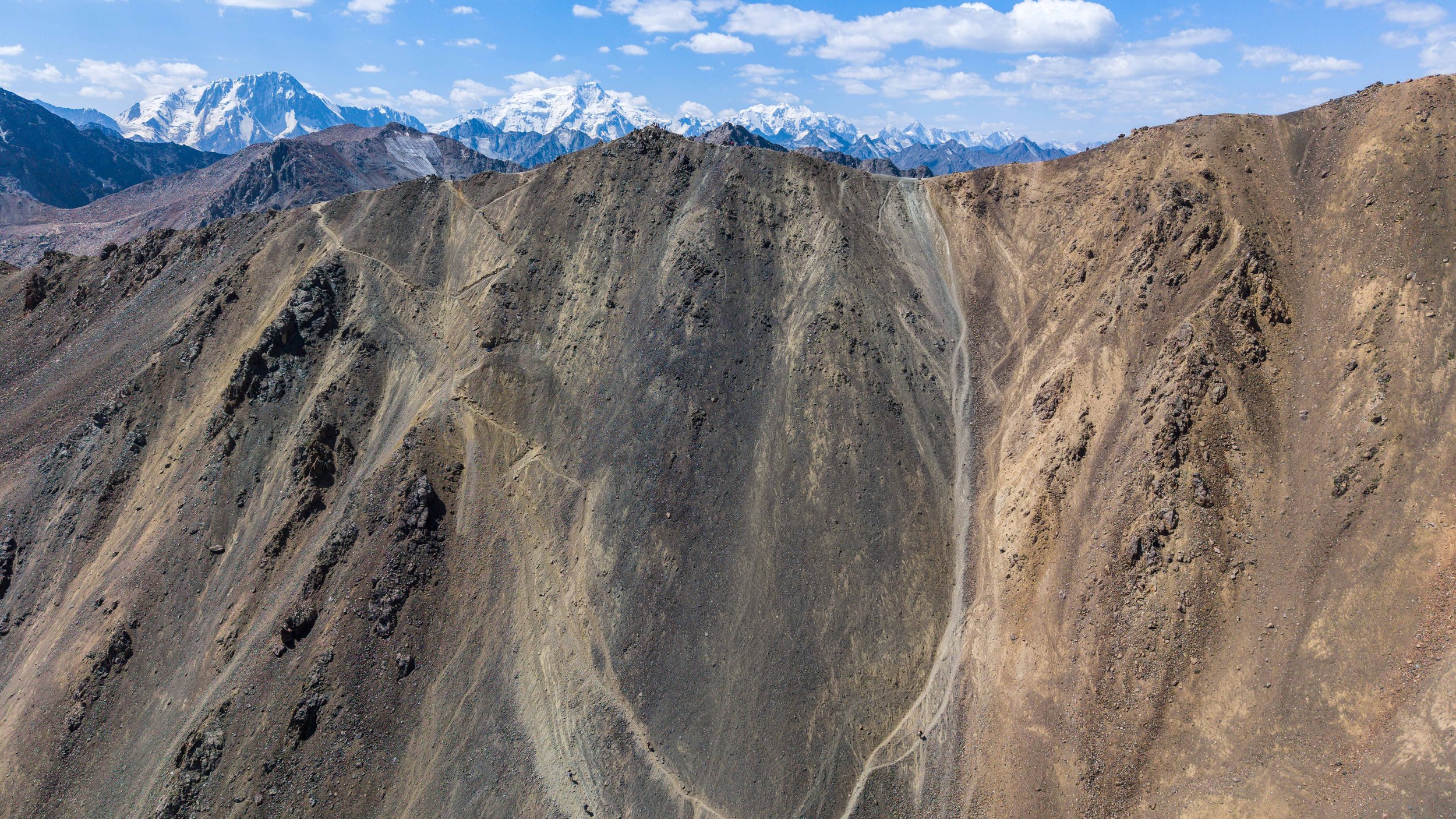
The trail rises steeply over loose and rocky ground.
At this altitude, progress feels slow.
Very slow.
You take a few steps.
Stop.
Take a few more.
Stop again.
It can feel as though the pass is getting further away rather than closer.
But eventually the gradient eases.
You reach the top.
And suddenly the world opens.
Standing at almost 4,000 metres
There are moments on a mountain trek when you stop thinking about distance.
This is one of them.
At roughly 3,900 metres, you are standing considerably higher than most people ever experience on an ordinary holiday.
The mountains stretch away in every direction.
The lake sits below.
The valleys disappear towards the horizon.
The air feels thin and cold.
And for a few minutes, all the effort of getting there seems worthwhile.
This is the point where you take the photographs.
But photographs don't quite capture the feeling.
They can't reproduce the wind.
They can't reproduce the cold.
They can't reproduce how hard you were breathing five minutes earlier.
And they certainly can't reproduce the sense of achievement.
The descent to Altyn-Arashan
The descent is where tired legs become important.
Going downhill sounds easier than going uphill.
It isn't always.
Steep descents place a huge amount of strain on the knees and quadriceps.
Loose rock makes footing uncertain.
And after two long days, your legs are already fatigued.
Take your time.
Use trekking poles if you have them.
Don't let gravity dictate your pace.
The trail eventually leads down towards Altyn-Arashan, and the scenery changes once again.
Rock and scree gradually give way to vegetation.
The valley becomes greener.
The air feels warmer.
And eventually you are back among trees and grass.
Arriving in Altyn-Arashan
Arriving at Altyn-Arashan feels like returning to civilisation.
Not exactly civilisation as most people know it.
There are no shopping centres or traffic lights.
But after the high alpine environment of Ala-Kul, the valley feels wonderfully welcoming.
Altyn-Arashan is famous for its natural hot springs.
And after a day of climbing and descending mountains, the idea of soaking in warm mineral-rich water sounds less like a tourist activity and more like medical treatment.
The hot springs
The hot springs are one of the great pleasures of the trek.
Imagine spending the day crossing a mountain pass at nearly 4,000 metres.
Your legs hurt.
Your shoulders hurt.
Your feet hurt.
Then you sit in warm water surrounded by mountains.
It is difficult to imagine a better end to the day.
The contrast is extraordinary.
Cold mountain air.
Warm water.
Snow-capped peaks.
Exhausted hikers.
A little conversation.
A lot of silence.
Day 4: Altyn-Arashan to Ak-Suu
The final day is technically easier than the previous two.
But don't underestimate it.
You have already walked more than 40 kilometres.
Your body knows it.
The trail follows the valley downwards, with the mountains gradually becoming less imposing as you lose altitude.
There is a psychological difference too.
You know you're finishing.
That changes everything.
The final kilometres
At the beginning of a trek, 15 kilometres can sound like nothing.
On day four, after three days in the mountains, it can sound enormous.
The feet are sore.
The backpack feels heavier.
The muscles are tired.
But the knowledge that the finish is approaching gives you another gear.
The landscape gradually becomes greener and more populated.
Eventually the mountain trail gives way to roads and signs of habitation.
You are heading towards Ak-Suu.
And suddenly, it's over.
60+ kilometres later
Standing at the end of the route, the distance becomes difficult to comprehend.
More than 60 kilometres.
Thousands of metres of ascent and descent.
A high mountain pass.
Ala-Kul.
Three different overnight environments.
Four days of walking.
It is a substantial physical achievement.
But the number doesn't really tell the story.
The real achievement is completing four consecutive days when every day demands something different.
The altitude is the real challenge
Distance gets most of the attention when people talk about trekking.
But on Ala-Kul, altitude deserves equal billing.
The highest point is around 3,900 metres, and large portions of the trek take place at elevations where your body is working harder simply to maintain normal activity.
You can be extremely fit and still feel the altitude.
That is important.
Fitness helps enormously with the physical demands.
It does not make you immune to altitude.
How altitude affects the trek
As you climb, atmospheric pressure decreases.
That means less oxygen is available with each breath.
Your body responds by increasing breathing and heart rate.
This can make an ordinary climb feel much harder.
You may notice:
Increased breathing
Faster heart rate
Reduced walking pace
Headache
Reduced appetite
Difficulty sleeping
General fatigue
Some symptoms can be part of normal acclimatisation.
Others can indicate serious altitude illness.
The important thing is knowing the difference.
Don't try to beat the altitude
The worst strategy is to treat altitude as something you can simply push through.
You can't.
If you are struggling, slow down.
If you feel unwell, tell your guide or hiking partners.
If symptoms become severe or worsen despite resting, descend.
There is no shame in changing plans.
The mountains don't care how determined you are.
What makes the trek physically demanding?
Several factors combine to make the Ala-Kul route challenging.
Distance
More than 60 kilometres over four days means a significant daily average.
Elevation
The route climbs from the lower valleys to almost 4,000 metres.
Terrain
The trail isn't a smooth hiking path.
Expect rocks, roots, mud, scree and uneven ground.
Weather
Mountain weather can change quickly.
Sun can become rain.
Warm temperatures can become cold.
Clear skies can disappear behind clouds.
Consecutive days
Perhaps the biggest factor is cumulative fatigue.
Day one is manageable.
Day two is harder.
Day three is the big test.
Day four requires you to keep going when your body is already tired.
What should you pack?
For a four-day high-altitude trek, packing intelligently matters.
You don't want to carry unnecessary weight, but you also don't want to discover that you left something essential behind.
Clothing
Layering is the key.
Pack:
Moisture-wicking base layers
Warm mid-layer
Fleece or insulated layer
Waterproof jacket
Waterproof trousers
Hiking trousers
Warm hat
Gloves
Spare socks
Lightweight camp clothing
Comfortable footwear for camp
The temperatures can vary dramatically between the lower valleys and high mountain passes.
Hiking equipment
Essential equipment includes:
Good hiking boots
Trekking poles
Backpack
Head torch
Water bottles or hydration bladder
Water purification method
Sunglasses
Sunscreen
Lip balm
Personal first-aid kit
Blister treatment
Power bank
Offline maps
Waterproof bags
Trekking poles are particularly useful on the descent from Ala-Kul Pass.
They can help with balance on loose ground and reduce some of the strain on your knees.
Food and hydration
Don't underestimate how much you will eat.
Long mountain days burn a lot of energy.
Meals at the camps provide the main calories, but carrying snacks is essential.
Good options include:
Nuts
Dried fruit
Chocolate
Energy bars
Biscuits
Jerky
Sandwiches
Electrolyte tablets
Drink regularly.
At altitude, dehydration can make you feel significantly worse.
Don't wait until you're desperately thirsty.
Sun exposure
High altitude means strong ultraviolet exposure.
Even when the temperature feels cool, the sun can be intense.
Use sunscreen.
Wear sunglasses.
Cover exposed skin.
And don't forget your lips.
A bright alpine environment reflecting sunlight can result in surprisingly severe sunburn.
The magic of the yurts
One of the most memorable parts of hiking in Kyrgyzstan is staying in yurts.
There is something wonderfully appropriate about sleeping in traditional-style mountain accommodation while surrounded by some of the country's highest peaks.
After a long day outside, a warm yurt feels incredibly welcoming.
You remove your boots.
Drop your backpack.
Sit down.
Someone serves tea.
And suddenly the day's struggles seem distant.
The people along the route
The landscape may be the headline attraction, but the hospitality is an important part of the experience.
Kyrgyzstan has a deep nomadic heritage, and hospitality is woven into the culture.
Sharing food and conversation after a long day on the trail is one of the pleasures of travelling through the mountains.
Even when you don't share a common language, there is an easy understanding between people who have just walked for hours through the same landscape.
What surprised me most
The biggest surprise of the Ala-Kul trek is how quickly the landscape changes.
On day one, you are surrounded by forest.
Then you climb.
The trees disappear.
The mountains become larger.
The ground becomes rougher.
The air becomes thinner.
Then Ala-Kul appears.
And after crossing the pass, everything changes again.
The descent towards Altyn-Arashan feels like moving through several different worlds in a single day.
The hardest moment
Everyone will have their own.
For some people, it will be the steep climb towards Ala-Kul.
For others, it will be the final ascent to the pass.
For me, it is the cumulative fatigue.
There is a particular moment on a multi-day trek when your body realises this isn't just today's walk.
Tomorrow you are walking again.
And the day after that.
The trick is not to think about the entire route.
Think about the next kilometre.
Then the next.
Then the next.
The best moment
Without question:
Seeing Ala-Kul for the first time.
You have spent hours climbing.
Your legs are tired.
The altitude is noticeable.
The trail seems to keep going upwards.
And then you see the lake.
Everything changes.
The fatigue is still there, but it becomes secondary.
You stop.
Take photographs.
Look around.
And realise why people come here.
Would I do it again?
Absolutely.
Even knowing how difficult it would be.
That is perhaps the best recommendation you can give a trek.
The Ala-Kul route is challenging enough that completing it feels like an achievement, but accessible enough that you don't need to be an elite mountaineer.
It combines almost everything that makes mountain trekking addictive:
distance, altitude, wilderness, dramatic scenery, physical challenge, simple accommodation and a genuine sense of adventure.
And finishing after 60-plus kilometres gives you something that a sightseeing holiday rarely provides.
You earned the view.
Final thoughts
The four-day journey from Karakol to Ak-Suu via Nomad Camp, Ala-Kul Lake and Altyn-Arashan is not simply a hike.
It is a progression.
You begin in the forest.
You climb into the mountains.
You reach the lake.
You cross the pass.
You descend into the valley.
You soak in hot springs.
And finally you walk out.
Over 60 kilometres of mountain trails.
Nearly 4,000 metres above sea level at the high point.
Four days of changing weather, tired legs, spectacular scenery and the occasional moment of wondering whether you really needed to do quite so much walking.
But that's exactly what makes it memorable.
There are easier ways to see Kyrgyzstan.
You can drive through the valleys.
You can visit viewpoints.
You can take photographs from the roadside.
But walking gives you something different.
It makes you part of the landscape.
You feel every climb.
You notice every change in temperature.
You hear the rivers.
You smell the pine forest.
You feel the wind on the pass.
And when Ala-Kul finally appears below you, you understand the landscape in a way that you simply can't from a vehicle.
Four days.
More than 60 kilometres.
One spectacular lake.
One enormous mountain pass.
Three very different camps.
And a final soak in the hot springs of Altyn-Arashan.
Ala-Kul isn't an easy trek.
But the best adventures rarely are.
