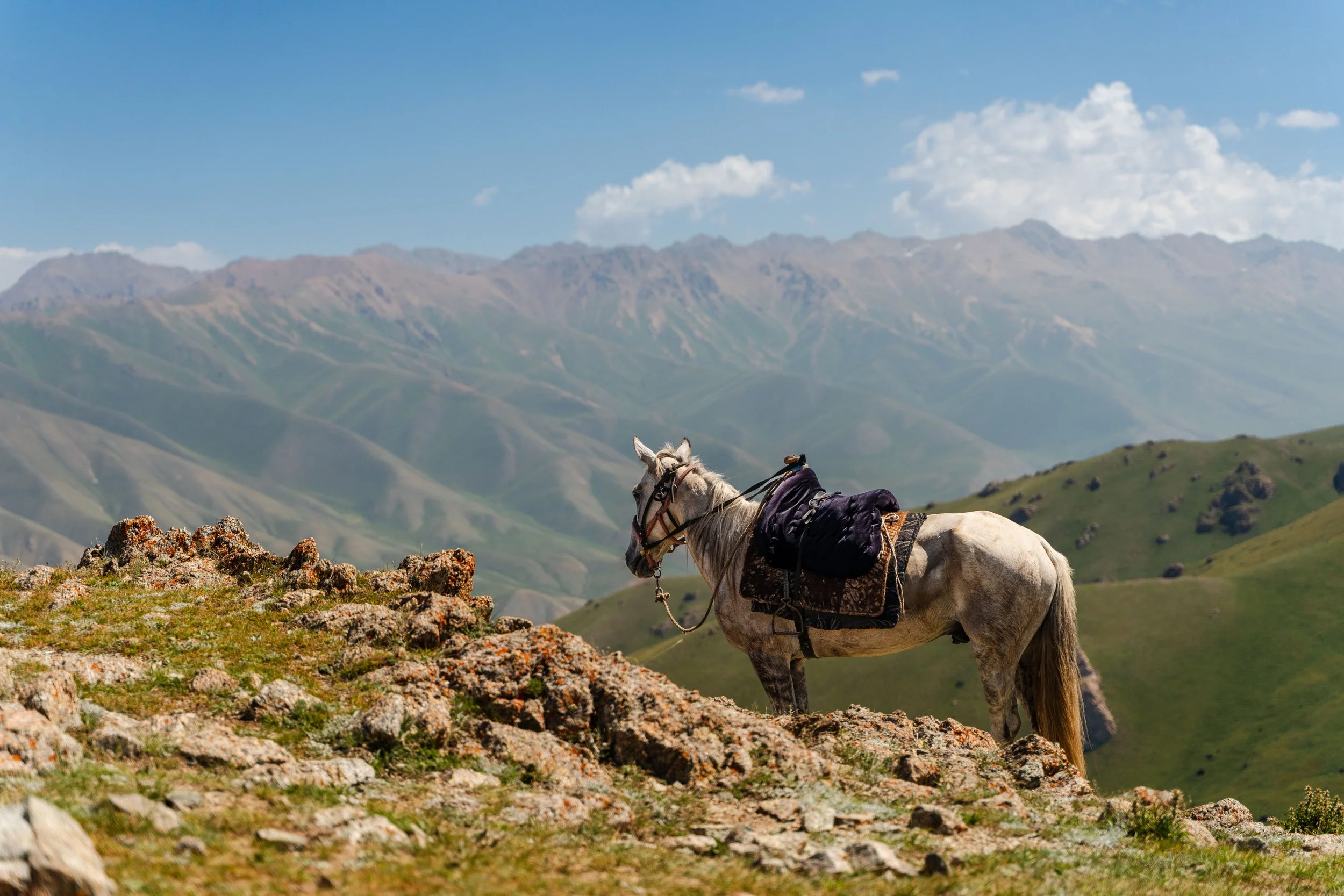
3 Days of galloping through the pastures of Kyrgyzstan, one of Asia’s most underrated countries that felt like something out of a movie!
This is an adventure that should be on everyones bucket list with some of the most incredible views the human eye can see.
It started in Bishkek, organised chaos of getting the infamous Marshutka out to Kyzart. With little to no information on this or at least mixed messages, let me tell you now it’s far from streamlined. You get to the “New Bishkek Station” and then wait… and wait… and wait until all seats are full in the mini bus (Marshutka). This is also done on a random pay what the driver feels like charging on the day cash only basis - for us, 600 som per person, for others 300. Despite what others tell you, negotiating Marshutka rides without speaking Russian is near impossible as they will fill the van eventually on popular routes so will happily leave you and your bags behind.
This would have to be one of the most hit & miss forms of transport i’ve come across in all my travels. No schedule, no fixed price, no stations along the way and sometimes no seat. It’s messy but it works.
Take the
Three Days on Horseback: Riding from Kyzart to Song-Kul, Kyrgyzstan
There are some journeys where the destination is the main event.
And then there are journeys where getting there is the adventure.
The three-day horse trek from Kyzart to Song-Kul in Kyrgyzstan is very much the second kind.
For three days, the road disappears and the horse becomes your only real means of transport. You leave the village of Kyzart behind, climb steadily into the mountains, cross high open valleys and passes, and eventually arrive at the enormous alpine lake of Song-Kul.
There are no busy roads.
No traffic.
No timetable.
No comfortable coach waiting at the end of the day.
Instead, there are horses, mountains, grasslands, yurts, cold rivers, enormous skies and a growing realisation that Kyrgyzstan is one of those places where travelling slowly is infinitely better than travelling quickly.
The journey to Song-Kul isn't particularly long by modern transport standards.
On horseback, however, three days gives you something completely different.
It gives you time to become part of the landscape.
Why ride to Song-Kul?
Song-Kul is one of Kyrgyzstan's most famous destinations, and for good reason.
At more than 3,000 metres above sea level, the lake sits in a vast mountain basin surrounded by rolling grasslands and distant snow-capped peaks.
It is spectacular.
But the lake itself isn't really the whole story.
Song-Kul is also one of the places where you can experience something of Kyrgyzstan's nomadic traditions.
During the summer months, shepherds move their animals to the high pastures, known as jailoo, and temporary yurts appear across the landscape.
Horses, sheep, cattle and sometimes yaks graze across the open grasslands.
The pace of life is completely different.
And arriving there on horseback feels almost like the natural way to do it.
You don't approach Song-Kul through a tunnel of tour buses.
You ride towards it across the mountains.
Day One – Leaving Kyzart
The first morning starts in Kyzart.
There is always something exciting about the moment when a horse trek begins.
The horses are being prepared.
Saddles are checked.
Bags are attached.
Everyone is introduced to their horse.
And suddenly the reality of the next three days becomes very real.
Until that moment, you're still thinking about the journey as a plan.
Now you're sitting on a horse.
And the mountains are waiting.
Meeting the horses
If you are an experienced rider, the first few minutes may feel completely natural.
If you're less experienced, the opposite may be true.
A horse is a long way up.
And once you're sitting in the saddle, you suddenly become much more aware of every movement.
The horse knows the mountains.
That's reassuring.
Your job is largely to learn how to work with it.
The first part of the journey is therefore as much about getting comfortable as it is about covering distance.
You learn how the horse responds.
You discover how to sit properly.
You work out how much you should use the reins.
And, hopefully, you remember the instructions you've been given about riding uphill and downhill.
Into the Kyrgyz mountains
Leaving Kyzart behind, the landscape quickly opens up.
The village becomes smaller.
The road becomes less significant.
And the mountains begin to dominate.
This is one of the great pleasures of horse trekking in Kyrgyzstan.
You aren't travelling along a conventional road.
The horses follow trails and tracks through the landscape, often moving across open grassland where there is little indication that a route exists at all.
You begin to understand why horses have been so important to life in Central Asia.
They are perfectly suited to this environment.
Finding the rhythm
Horse riding has a rhythm.
At first, you're concentrating on everything.
How am I sitting?
What are my hands doing?
Is the horse comfortable?
Am I holding the reins correctly?
Then, gradually, it becomes more natural.
The horse settles into its pace.
The group stretches out.
Conversation comes and goes.
And you start looking around.
That's when the experience changes.
You're no longer thinking constantly about riding.
You're simply moving through the landscape.
The mountains get bigger
The further we travelled from Kyzart, the more remote the landscape felt.
Green hills rolled into larger mountains.
The horizon seemed to move further away.
There were few signs of modern life.
No buildings.
No traffic.
Just enormous open country.
The silence was striking.
You could hear the horses.
The wind.
Occasionally the sound of another rider.
And little else.
It is difficult to appreciate just how quiet a landscape can be until you spend several hours moving through it on horseback.
The first night
By late afternoon, the first day's riding had begun to catch up with us.
Horse riding uses muscles you don't necessarily know you have.
Your legs.
Your lower back.
Your core.
And, particularly if you aren't used to spending several hours in a saddle, places you would rather not discuss.
The first evening is therefore a welcome opportunity to get off the horse.
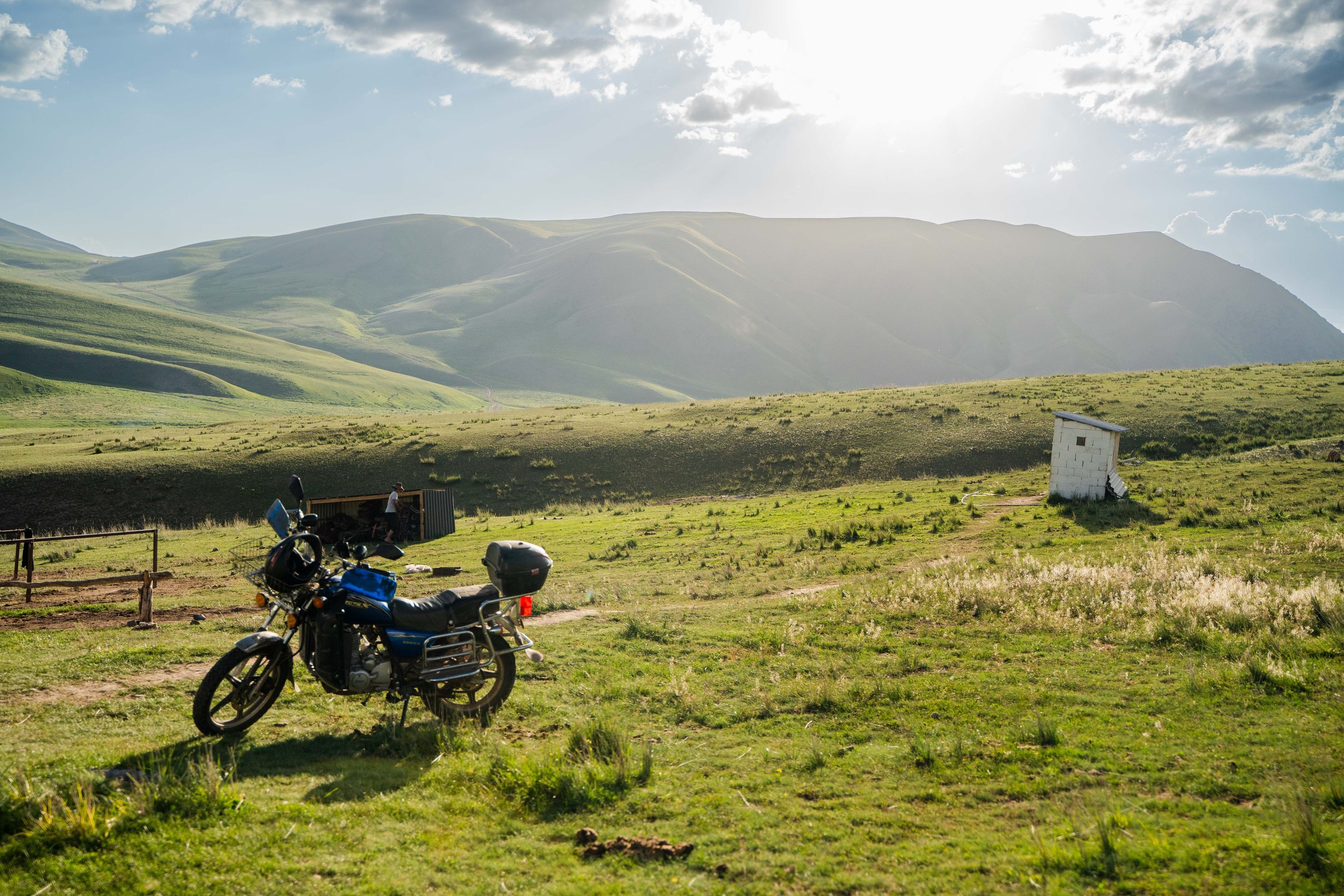
Depending on the exact route and season, the overnight stop can be in a yurt or simple mountain accommodation.
Either way, the experience is wonderfully basic.
There is food.
There is shelter.
There are mountains.
And there is the knowledge that tomorrow you'll be getting back on the horse.
Life in a yurt
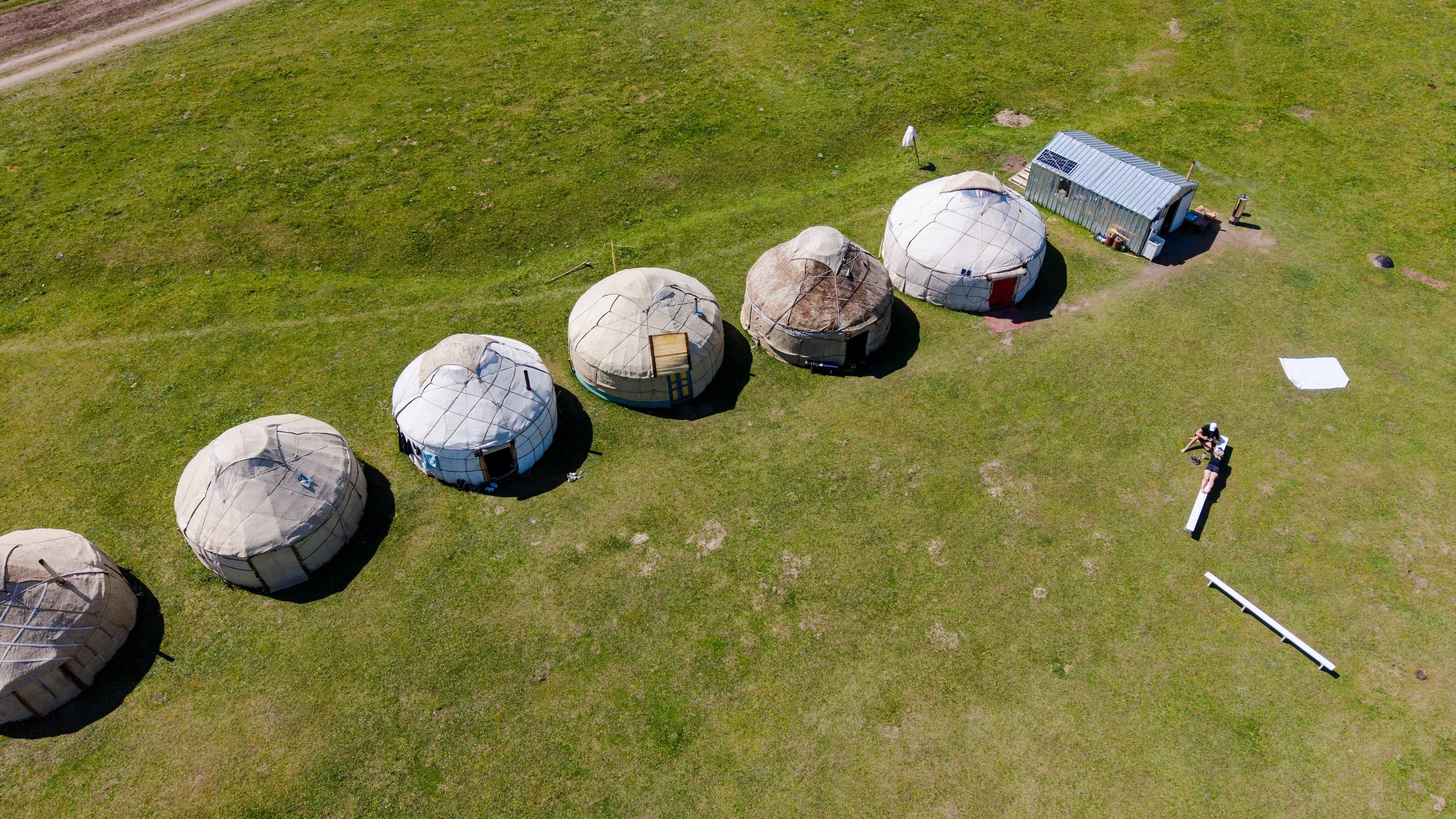
Staying in a Kyrgyz yurt is one of the highlights of the journey.
The structure is beautifully practical.
Warm when necessary.
Ventilated when needed.
Simple.
Comfortable.
And deeply connected to the nomadic culture of the region.
After a full day outdoors, the yurt feels incredibly welcoming.
Shoes come off.
Tea appears.
Food is served.
People talk.
And eventually the tiredness takes over.
Day Two – Higher into the mountains
The second morning begins with the familiar ritual of preparing the horses.
By now, you're slightly more confident.
You know which horse you're riding.
You know what the saddle feels like.
And you've got a better understanding of how the day is likely to unfold.
The route, however, is about to become more dramatic.
Today takes us deeper into the high country.
Climbing towards the pass
The horses begin climbing.
The pace slows naturally.
The trail becomes steeper.
The landscape opens further.
There are fewer trees.
The mountains become increasingly bare.
At this point, the scale of Kyrgyzstan really starts to hit you.
There are mountains everywhere.
Not just one dramatic peak.
Whole ranges.
Valleys running between them.
Ridges stretching across the horizon.
It feels enormous.
Riding uphill
Riding uphill requires a different technique from riding on flat ground.
You need to allow the horse to find its rhythm.
Don't fight the movement.
Stay balanced.
And trust the animal beneath you.
The horse is doing something it has done countless times before.
For the rider, however, it can feel like a serious adventure.
Especially when you look up and realise how high you've climbed.
The high mountain pass
Eventually, we reached the pass.
Standing at the top after climbing through the mountains is one of those moments when the scale of the journey becomes apparent.
You can look back towards where you've come from.
Then turn around and see an entirely different landscape ahead.
The feeling is difficult to describe.
There is a sense of achievement.
But there is also a sense of insignificance.
You are one tiny person on a horse in an enormous mountain landscape.
And that's rather wonderful.
The descent
The descent requires concentration.
Horses are extremely capable mountain animals, but that doesn't mean the rider can switch off.
The trail can be uneven.
The slope can be steep.
Loose ground can make footing uncertain.
You need to remain balanced and follow the horse's movement.
Eventually the landscape begins to soften.
The high pass is behind you.
The valley opens ahead.
And somewhere beyond those mountains is Song-Kul.
The first sight of Song-Kul
There are some views that make you stop talking.
The first sight of Song-Kul is one of them.
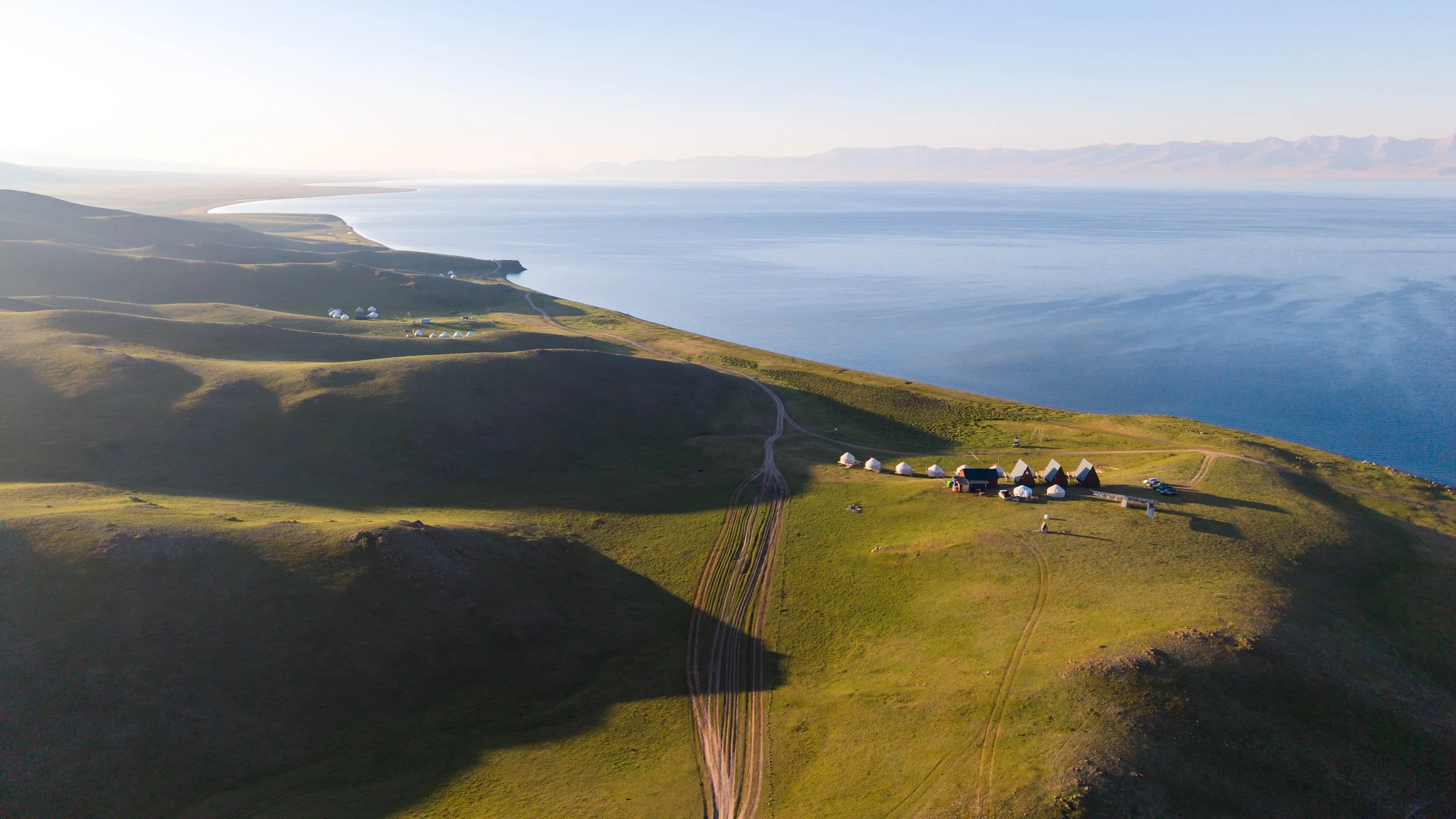
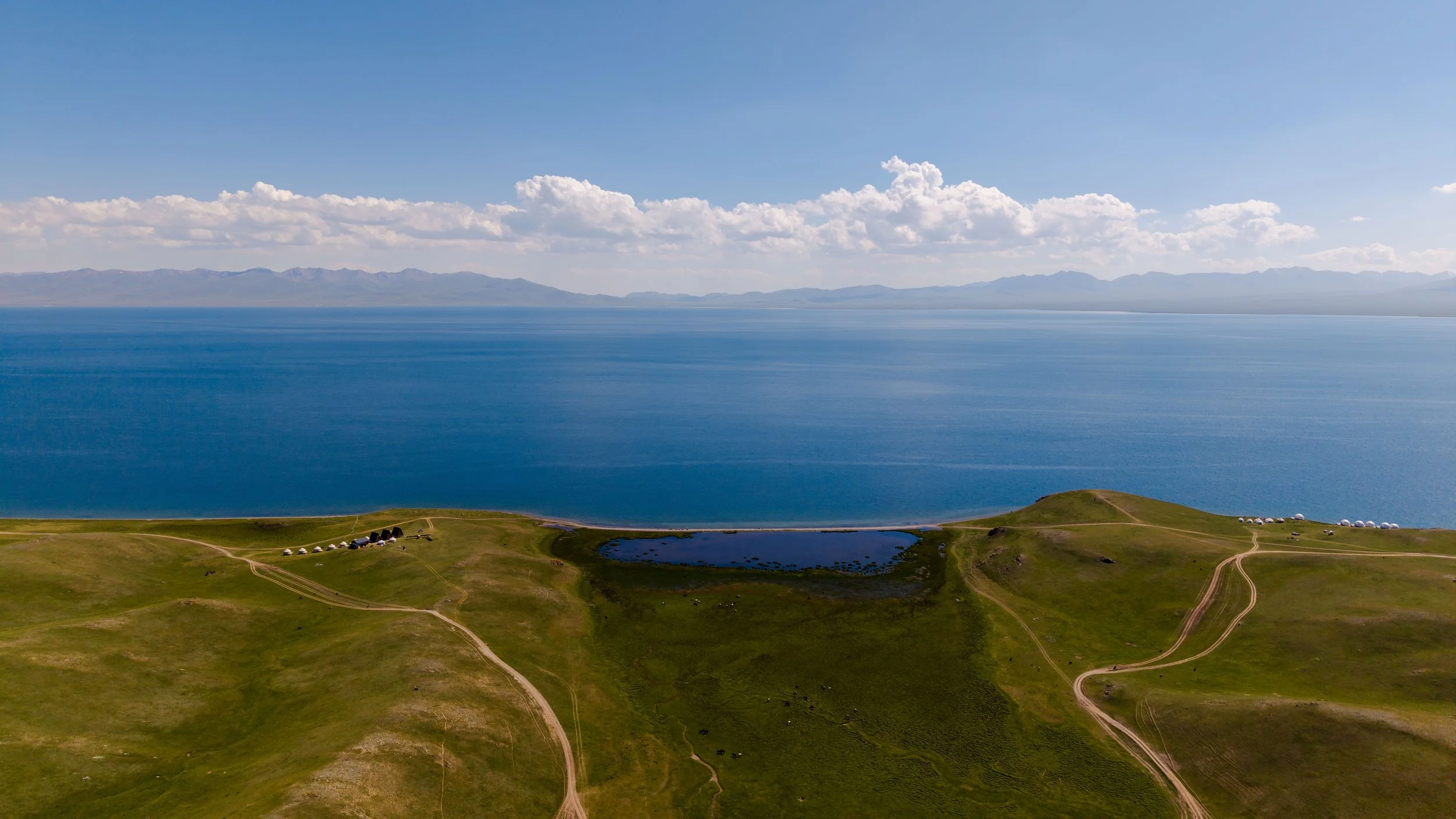
After days of travelling through valleys and mountains, suddenly the landscape opens into an enormous basin.
And there, stretching across the horizon, is the lake.
Blue water.
Green and golden grassland.
Mountain peaks beyond.
Tiny white yurts scattered across the landscape.
Horses moving through the pasture.
It looks almost unreal.
Riding towards the lake
The final approach is one of the most memorable parts of the journey.
The trail descends towards the lake and the landscape becomes incredibly open.
You can see for kilometres.
There is nowhere to hide.
No buildings to block the view.
No city noise.
Just grassland, mountains and sky.
And you're sitting on a horse, moving across it.
It feels almost timeless.
Day Three – Song-Kul
Waking up beside Song-Kul is a completely different experience from waking up in a hotel.
The morning light moves across the mountains.
The air is cold.
The grass is wet with dew.
And the landscape outside the yurt seems to stretch forever.
This is the kind of place where you don't need an alarm clock.
You wake up because the environment is already awake.
The nomadic life around Song-Kul
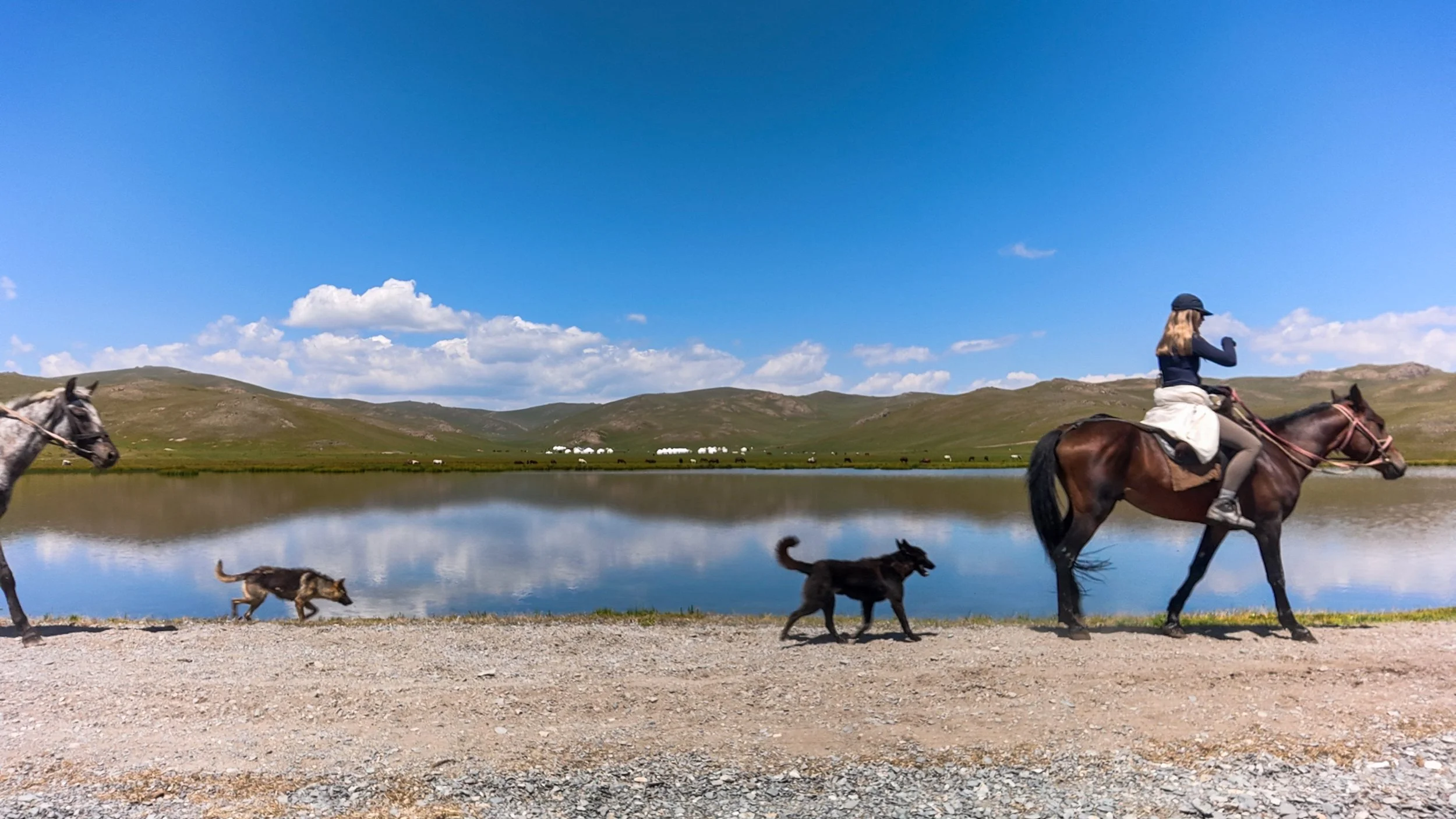
During the summer, Song-Kul becomes a seasonal home for nomadic families and their animals.
Yurts appear across the jailoo.
Horses graze nearby.
Shepherds move livestock across the grasslands.
It is a reminder that these mountains aren't simply a wilderness for visitors.
They are a working landscape.
People have been moving through these high pastures for generations.
And being here provides a small glimpse into a way of life that remains closely connected to the land.
More than just a horse ride
One of the things I came to appreciate about the journey is that it isn't really a three-day horse ride.
It's three days of being immersed in a landscape.
The horse simply makes it possible.
You experience the mountains at walking pace.
You smell the grass.
You feel the cold air.
You hear the saddle creak.
You watch the weather move across the peaks.
You stop for lunch in places where a vehicle would never go.
And because you're travelling slowly, you notice things.
The weather
The weather in the mountains can be unpredictable.
At one moment, the sun can be warm enough to make you peel off a layer.
A short time later, clouds appear and the temperature drops.
Rain can arrive quickly.
Wind can be surprisingly cold.
At Song-Kul, altitude makes the weather feel particularly serious.
Even in summer, mornings and evenings can be cold.
This is not the sort of trip where you should pack purely for warm-weather conditions.
Layers are essential.
So is waterproof clothing.
What to wear for the ride
Comfort matters more than fashion.
You'll be sitting in a saddle for hours.
Wear:
Comfortable trousers
Layers
Waterproof jacket
Warm fleece or insulating layer
Sturdy shoes or riding boots
Warm socks
Gloves
Sunglasses
Sun protection
And don't underestimate the sun.
At high altitude, ultraviolet exposure can be intense even when the temperature is cool.
What surprised me about horse trekking
The biggest surprise was how physical it is.
Horse riding can look deceptively easy when you're watching someone else do it.
Sit on horse.
Hold reins.
Enjoy scenery.
Simple.
Except after several hours, your body starts to disagree.
Your thighs ache.
Your back becomes tired.
Your hands feel the strain.
And getting off the horse can produce a brief moment where your legs don't quite know what they're supposed to do.
But then you rest.
Eat.
Drink.
Sleep.
And the following morning you climb back into the saddle.
The relationship with the horse
Perhaps the most rewarding part of the trip is developing a relationship with the horse.
At the beginning, you're strangers.
You don't know its temperament.
You don't know its habits.
You don't know how it responds to your commands.
After a few days, things change.
You recognise its movements.
You learn its personality.
You know when it wants to slow down.
You start trusting it.
And it begins to feel less like transportation and more like a companion.
The importance of your guide
A good local guide makes a huge difference.
They know the trails.
They understand the horses.
They know the weather.
They know where to stop.
And they understand the mountain environment in a way that no map can fully communicate.
They can also help you understand the cultural side of the trip.
The mountains aren't simply scenery.
They are home.
Food on the trail
Food is always an important part of a Kyrgyz mountain adventure.
After several hours riding, even a simple meal tastes incredible.
Expect hearty food designed to provide energy.
Bread.
Rice.
Potatoes.
Meat.
Soups.
Noodles.
Dairy products.
And plenty of tea.
Kyrgyz hospitality often revolves around food and drink, and being welcomed into a yurt for a meal can become one of the memorable experiences of the entire journey.
Tea, conversation and mountain evenings
There is a particular feeling to evenings in the mountains.
The sun disappears.
The temperature drops.
The mountains become silhouettes.
Someone pours another cup of tea.
And conversation slows down.
You have nowhere you need to be.
No emails.
No traffic.
No appointment.
Just the next morning's ride.
It's incredibly liberating.
The landscape around Song-Kul
Song-Kul isn't just about the lake.
The surrounding landscape is enormous.
Rolling grasslands rise towards mountain ridges.
Snow remains on distant peaks.
Horses move freely through the pastures.
Birds circle above the water.
Clouds sweep across the mountains.
And occasionally the entire landscape changes colour as the light moves.
It's the sort of place where you can sit for an hour without feeling the need to do anything.
Three days without a road
Perhaps the biggest luxury of the trip is the absence of roads.
Modern travel is usually built around roads.
We drive on them.
We measure journeys by them.
We plan distances around them.
On horseback, that logic disappears.
The trail is wherever the landscape allows it to be.
You cross open valleys.
Follow old tracks.
Climb passes.
Move beside streams.
And sometimes simply cross open grassland.
It feels wonderfully primitive.
Would I recommend the three-day ride?
Yes — with one qualification.
You need to be prepared for the physical reality.
If you have never ridden a horse before, three consecutive days in the saddle can be challenging.
Even experienced riders will feel it.
But you don't need to be an expert horseman.
The important things are listening to your guide, treating the horse well, maintaining your balance and not trying to force the pace.
The horses know the mountains.
Trust them.
What makes the journey special
The lake is spectacular.
But if I'm honest, the lake isn't the part I remember most.
I remember the journey towards it.
The first morning leaving Kyzart.
The gradual climb.
The silence.
The feeling of the mountains getting bigger.
The horses moving steadily uphill.
The cold wind at the pass.
The moment the landscape opened.
And then that first glimpse of Song-Kul.
I remember the yurts.
The tea.
The food.
The aching legs.
The laughter.
And the strange feeling of having spent three days moving through a landscape that seemed completely disconnected from the modern world.
The final ride
Eventually, of course, the adventure has to end.
The horses are returned.
The saddles are removed.
The bags are unloaded.
And suddenly you're standing on solid ground again.
Your legs feel slightly strange.
You realise how much you have become accustomed to the movement of the horse.
And then you look back towards the mountains.
Three days earlier, Kyzart had seemed like the beginning of an adventure.
Now it feels like another world.
Final thoughts: arrive slowly
There are faster ways to reach Song-Kul.
You can drive.
You can organise transport.
You can visit for a day.
But arriving on horseback gives you something completely different.
It gives you time.
Time to watch the mountains change.
Time to cross the high passes.
Time to experience the weather.
Time to talk.
Time to become comfortable with the horse.
Time to understand why these high pastures have been so important to the people who live here.
And eventually, after three days of riding, you arrive at Song-Kul.
The lake is there.
The mountains are there.
The yurts are there.
The horses are grazing.
And you realise that the destination was never really the point.
The point was the journey.
Three days.
A horse.
A mountain range.
A high-altitude lake.
A handful of yurts.
And a landscape so vast that, for a while, the rest of the world seems to disappear.
That's the magic of riding to Song-Kul.
You don't simply visit the lake.
You ride into it.
